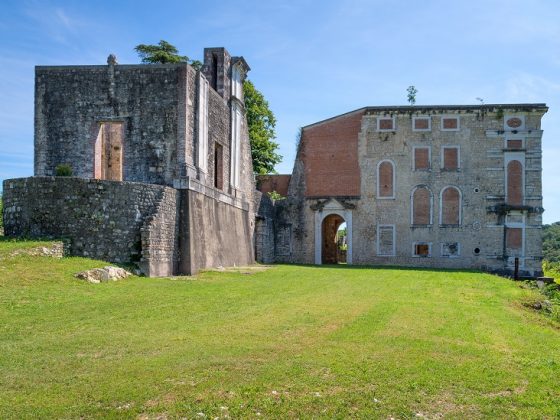
The castle stands on high ground that strategically dominates the entire valley; it was probably already settled since prehistoric times. The ancient fortress was a very simple building that in 973 became a real medieval castle with crenellated walls, towers and walkways. In 1411 the burgeoning growth of the castle-village was halted by fire, and in the second half of the 1700s a luxurious palace was built on the remains of the fortress, characterized in part by the effective play of asymmetries, and in part, on the main facade facing the village, by strict symmetry. The whole was complemented by a garden with flower beds. Inhabited for about a century, in the mid-19th century it was abandoned and from there left to ruin. Hard were the blows inflicted on the structure by both the Great War and the 1976 Earthquake, but it was precisely through reconstruction funds that the regional superintendence was able to intervene with consolidation works, which today make it possible to visit the ancient fragments and the surrounding green area.